Tesla’s Throne is Shaking: How Li Auto and Rivian are Captivating a New Generation of Investors
AI Summary
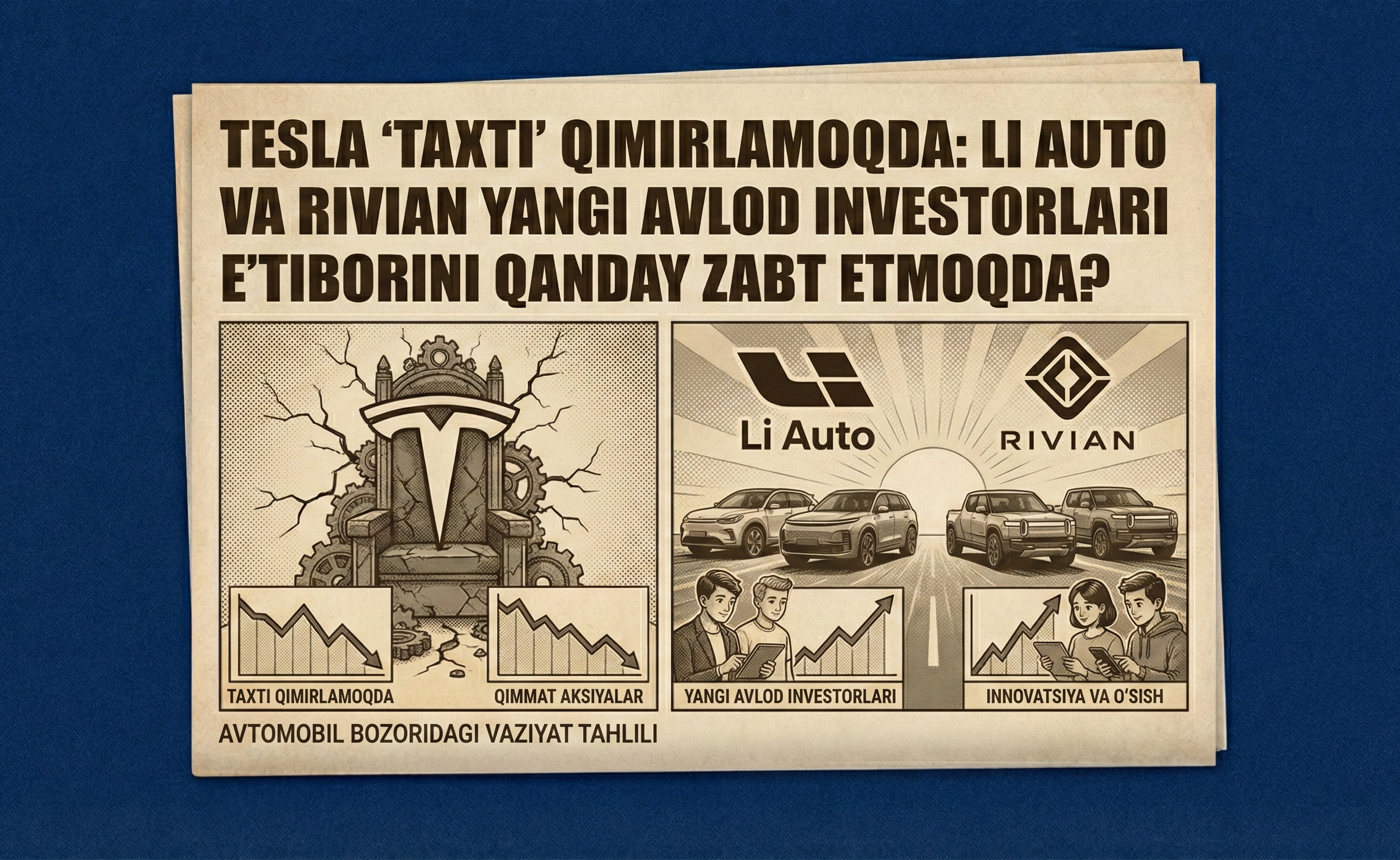
Tesla Inc., the long-standing hegemon of the Electric Vehicle (EV) market, is now locked in a fierce battle to maintain its pioneering status. As we look at the market dynamics of late 2025 and early 2026, it is clear that global investors are shifting their focus away from mere scale toward "agile" companies with precise regional strategies and specialized models. Brands like Li Auto and Rivian Automotive are surging into the market with growth rates reminiscent of Tesla’s own meteoric rise a decade ago.
Li Auto: The Hybrid Success Formula in the Chinese Market
Chinese manufacturer Li Auto has achieved significant growth in its share price in recent months. The company’s success is rooted in its firm grasp of the premium SUV segment and a unique technological approach. Unlike Tesla, Li Auto does not limit itself to battery-electric vehicles (BEVs); it offers hybrid models with range extenders. This strategy has proven decisive for consumers in areas with infrastructure limitations, leading to a stellar 40% annual increase in regional sales. For the discerning investor, Li Auto represents more than just an automaker; it is a high-tech platform perfectly calibrated for the complexities of the Chinese market.
Rivian: The New Tesla of the "Adventure" Segment
While Li Auto pressures Tesla in Asia, Rivian Automotive is challenging Tesla’s "pure-play" EV dominance in the U.S. domestic market. Rivian’s trajectory mirrors Tesla’s path in the 2010s: evolving from a niche manufacturer for adventure enthusiasts into a mass-market leader. With a major delivery van partnership with Amazon and its R1T pickup reportedly outperforming the Cybertruck in off-road capabilities and design appeal, Rivian is making a strong case for itself. Shares in Rivian surged by over 50% last quarter following production ramps and cost-optimization measures, restoring investor confidence in the company’s path to profitability.
Tesla: A Strategic Pivot to AI and Robotics
Tesla is not standing still, but its core strategy has undergone a fundamental evolution. Although its capitalization has reached $1.6\ \text{trillion}$, growth is no longer driven solely by vehicle sales but by artificial intelligence and energy storage projects. Under Elon Musk's leadership, the company is prioritizing its Full Self-Driving (FSD) software and Optimus robotics. However, for the first time in history, Tesla's U.S. market share fell below 50% in 2025, signaling to investors that its dominance as a traditional automaker is waning in favor of its broader technological ambitions.
Outlook for 2026: Key Risks and Opportunities
Industry insiders note several critical risks for 2026. First, the phasing out of federal tax credits could dampen U.S. sales growth. Second, geopolitical tensions and tariffs on Chinese imports may hinder the global expansion of players like Li Auto. Finally, the return of legacy giants like Ford and GM to hybrid strategies adds another layer of complexity to the market. In this environment, only companies that maintain technological agility and strict financial discipline will remain attractive to institutional investors.