The Market Price of Peace: Donbas’s “Free Zone” and the Shattered Silence over Novgorod
AI Summary
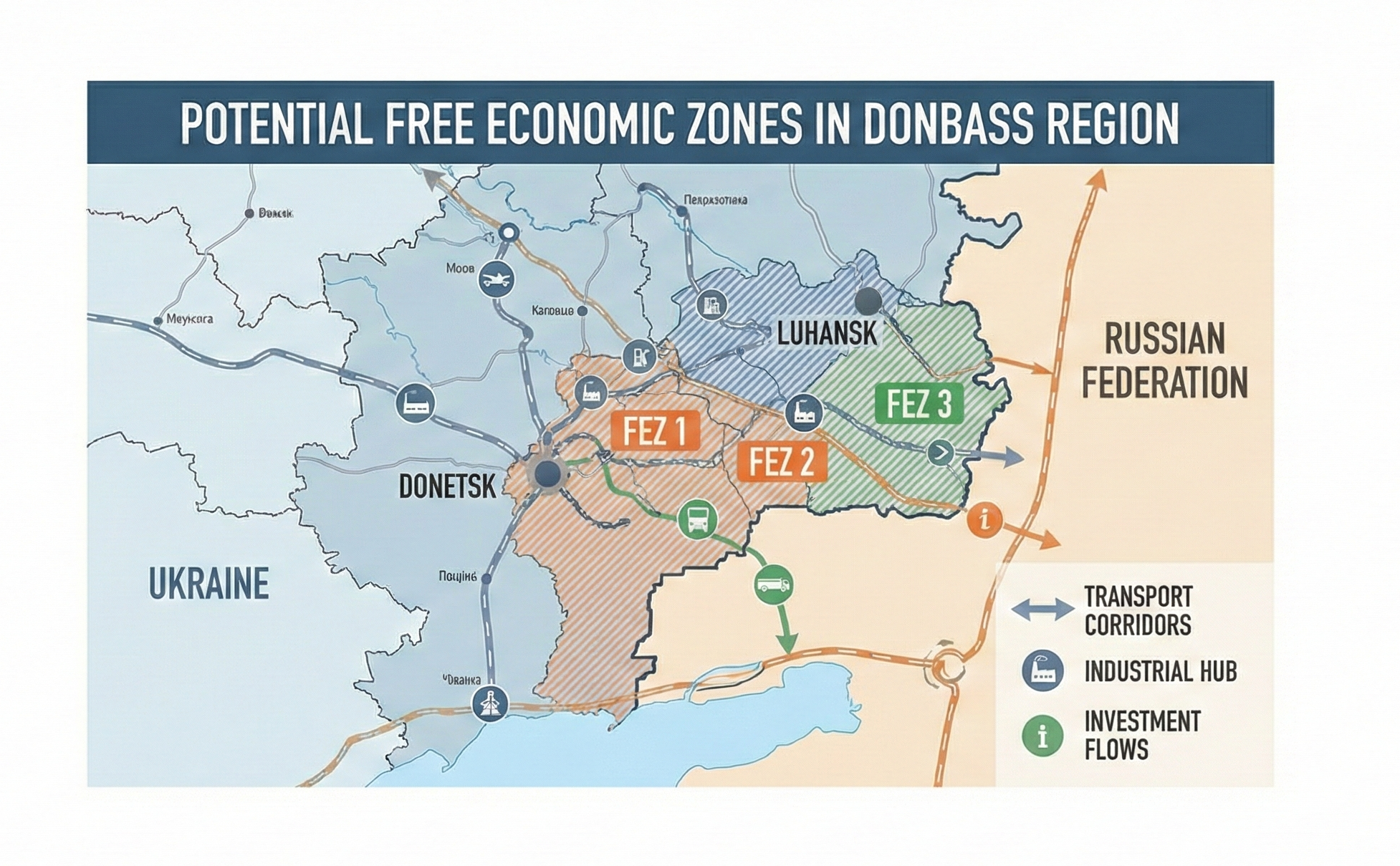
In the arena of global politics, wars often ignite on bloody battlefields and conclude around cold, calculated negotiating tables. Current developments surrounding Ukraine suggest that untying the geopolitical knot now requires not only diplomacy but also economic pragmatism. President Volodymyr Zelenskyy's recent statements, particularly the proposal for a Free Economic Zone (FEZ) in Donbas, represent more than a military withdrawal; they are the first signs of a strategy to "purchase peace through capital." In his Fox News interview, one thing is clear: Kyiv has shifted from emotional rhetoric to the language Donald Trump understands—the language of interests and deals.
Zelenskyy’s proposed model is complex yet logically enticing. By linking territorial concessions or "freezing" to a national referendum, he shifts political accountability to the public. Simultaneously, the FEZ idea reduces these conflict zones to open markets for global players. The logic is simple: if the economic interests of major Western corporations and Russia intersect in Donbas, stock quotes should replace the sound of artillery. This proposal, viewed against the backdrop of a 20-point peace plan allegedly 90% agreed upon with Donald Trump, appeared to be a glimmer of hope for war-weary global markets.
However, the Kremlin’s silence and Dmitry Peskov’s reticence regarding the Zaporizhzhia NPP and the economic zone indicate that a massive backroom bargain is still underway. For Moscow, this is not merely an economic project but a matter of strategic security and the recognition of new territorial realities. At this delicate juncture, the unexpected events of the evening of December 29 overturned all calculations. The drone attack on the presidential residence in the Novgorod region shook not only air defense systems but also the newly laid foundations of diplomacy. The phone call between Putin and Trump was not as warm as expected; the Kremlin announced a re-evaluation of prior agreements due to the attack—a significant blow to political trust.
From the perspective of Tashkent's business circles, a potential economic zone in Donbas is a vital issue. The reopening of Northern transport corridors, the reduction of logistics costs, and the curbing of global inflation all depend on these agreements. The more difficult the "Ukraine deal" between Russia and the U.S. becomes, the longer volatility will persist in Central Asian markets.
In conclusion, peace, much like financial markets, is highly sensitive to unpredictable events. When a single drone strike can reset months of complex negotiations, the feasibility of "Free Economic Zones" remains questionable. True peace is found not in paper treaties, but in shared economic interests that no party dares to violate.